November 2026 // by Simon
The EU is moving hundreds of billions into defense faster than ever before. Almost nobody is asking who keeps watch over where that money and those weapons end up.
Twenty percent: That is the threshold below which Germany no longer has a say over French arms exports. If less than a fifth of a weapon’s components come from Germany, Paris decides alone where it gets sold. Both governments agreed on this in 2019. The reasoning makes sense: if you build weapons together, you cannot wait for your partner’s sign-off on every sale. But so does the consequence. The closer Europe cooperates on arms, the less the country with the strictest rules gets to decide.
It is a small detail. It also shows, in miniature, what is happening across the continent right now.
More money, faster than ever
Since Russia invaded Ukraine, the EU has reinvented itself. For decades, its promise was prosperity. Now it is security. The European Commission wants its defense plan, Readiness 2030, to mobilize at least 800 billion euros. The money flows along two routes.
The first leads back to national capitals. The EU now lets member states break its common budget rules for defence: up to 1.5 percent of GDP in extra spending, for four years. In July 2025, the Council switched on this exemption for 15 countries. Today it is 18. For everything else, the rules stay tight. Buy more tanks, and you can borrow more. Build more housing, and you cannot.
The second route leads to Brussels. Through a program called SAFE, the EU borrows up to 150 billion euros on capital markets and passes it on to governments as cheap loans. There is one condition: components from outside Europe may make up no more than 35 percent of the cost. This is industrial policy with a geopolitical edge. Whoever depends on someone else’s supply chains can be squeezed. So Europe is meant to build its own and to build together.
Taken together, this makes Europe more capable of acting. Whether it also makes Europe safer is another question. But the money is moving, and it is moving fast.
An old dilemma, new clothes
Economist Dani Rodrik has a simple way of describing situations like this. Deep economic integration, national sovereignty, and democracy cannot all be had at once. You can have two at most. Something always gives.
Defense used to be the exception. EU treaties still allow member states to keep their arms industries outside the single market. Every country bought from its own manufacturers, every parliament voted on its own budget, and every government approved its own exports. Fragmented and inefficient, yes. But under democratic control.
Europe’s geopolitical turn is breaking that exception open. Part of the money flows back into national budgets, while the market for weapons becomes European. And democracy? It gets stuck somewhere in between.
Where oversight slips away
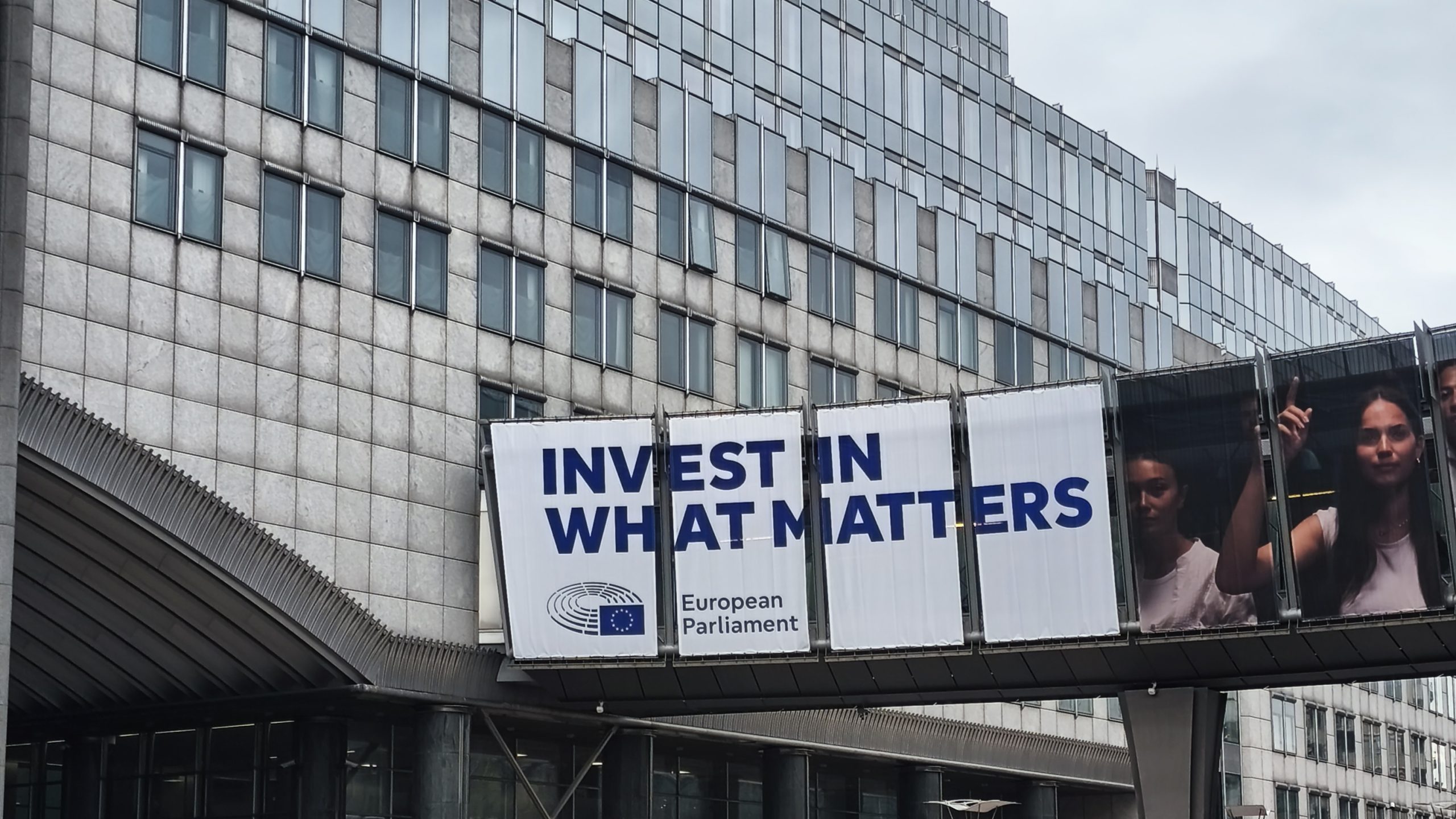
At the European level, it is bypassed. SAFE was not passed through the EU’s normal lawmaking process. It was adopted under Article 122 of the EU treaties, an emergency clause that lets member state governments decide without the European Parliament. In August 2025, Parliament took the Council to the EU’s top court over it. Notably, Parliament supports SAFE itself. It simply wants a vote. The case is still pending.
At the national level, oversight is fragmented. Since 2008, the EU has had common criteria for arms exports, including the human rights situation in the buyer country. But every government interprets them on its own and very differently. The more weapons are built jointly, the more weight deals like the twenty percent rule carry. Peace researchers have long warned that final assembly could drift to the countries with the weakest controls. In the worst case, that means a race to the bottom.
SAFE changes nothing here. It ties its money to European components, not to European export rules.
Speed is not an excuse
The obvious objection: Europe is under pressure and has to act quickly. True. But the normal legislative process would have delayed SAFE, not blocked it. Parliament was ready to move. Leaving it out was a choice, not a necessity.
The bigger risk lies elsewhere. Once urgency becomes routine, emergency procedures become routine too. Long-term decisions are then made around the people voters actually elected. That is no longer crisis management. It is a new normal.
Oversight has to follow the money
The fix is already built into the tool. The EU attaches conditions to its money, such as buying European. It could just as easily attach conditions on oversight. Anyone using European money or European exemptions for arms should have to meet binding minimum standards for exports.
And the European Parliament should be able to scrutinize how that money is spent.
Such a standard would be a floor, not a ceiling. No country would have to back exports it opposes. Stricter national rules would still be allowed. But nobody could slip under the common minimum just because a weapon is assembled somewhere else.
Over the past three years, Europe has shown it can move money for defense quickly. Now it has to show it can control what happens with that money. Otherwise Europe rearms, and oversight stays home.
Sources
- Council of the EU, press release on the national escape clause, 8 July 2025
- Council of the EU: What is SAFE?
- European Parliament v Council, Case C-560/25
- Wisotzki/Mutschler (2021): No common position! European arms export control in crisis
- Genovese (2026): Rearming Europe Through Article 122 TFEU
- German Bundestag, Drucksache 19/18828

Schreibe einen Kommentar